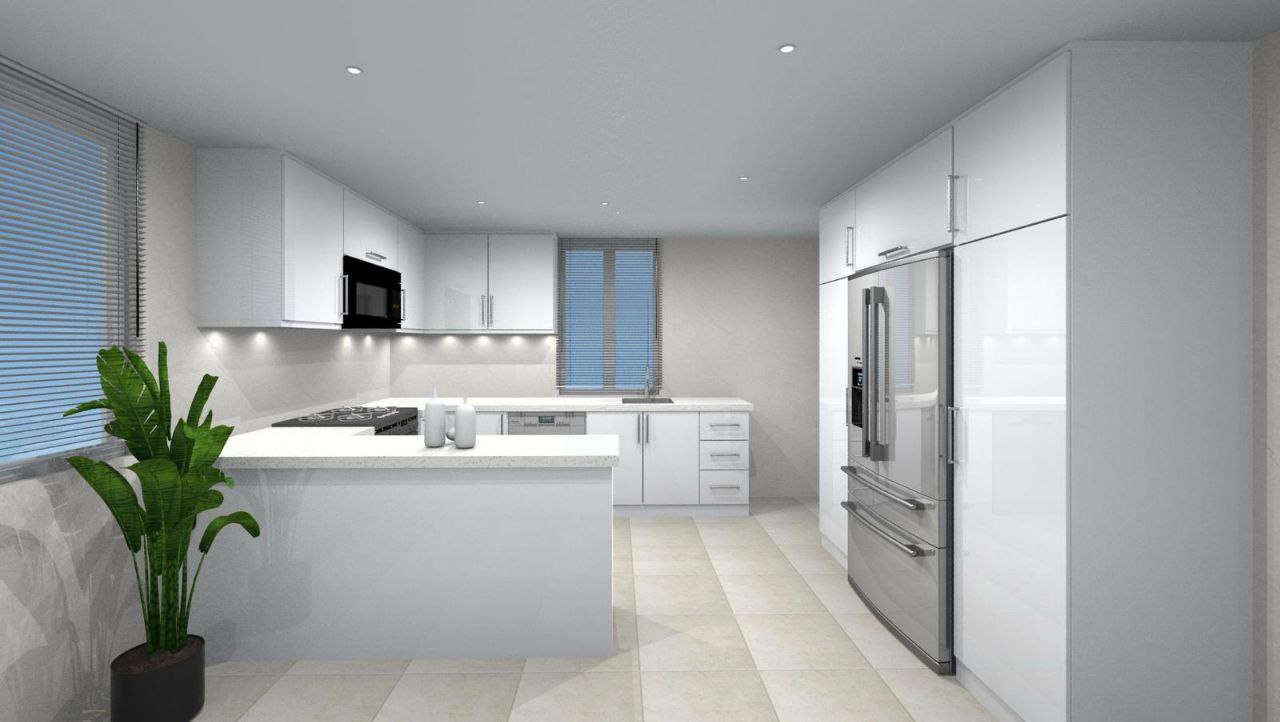
Should You Keep, Reface, or Replace Your Kitchen Cabinets?
August 2026 - 9 min read
Dated cabinets are not necessarily bad cabinets. Learn how to tell whether the structure is worth keeping or should be replaced, before committing your countertop budget.
The right decision starts with the cabinet boxes, not the doors
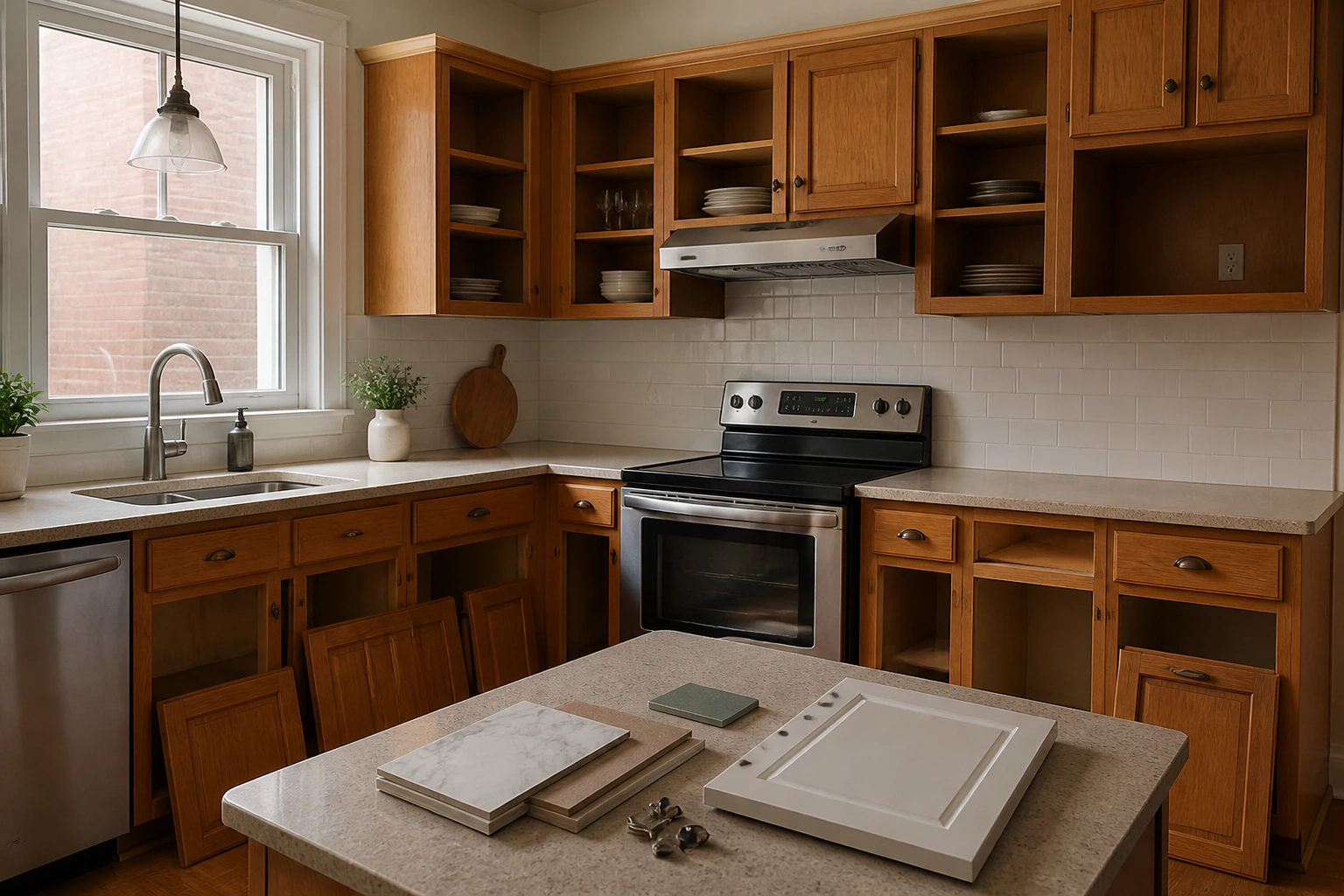
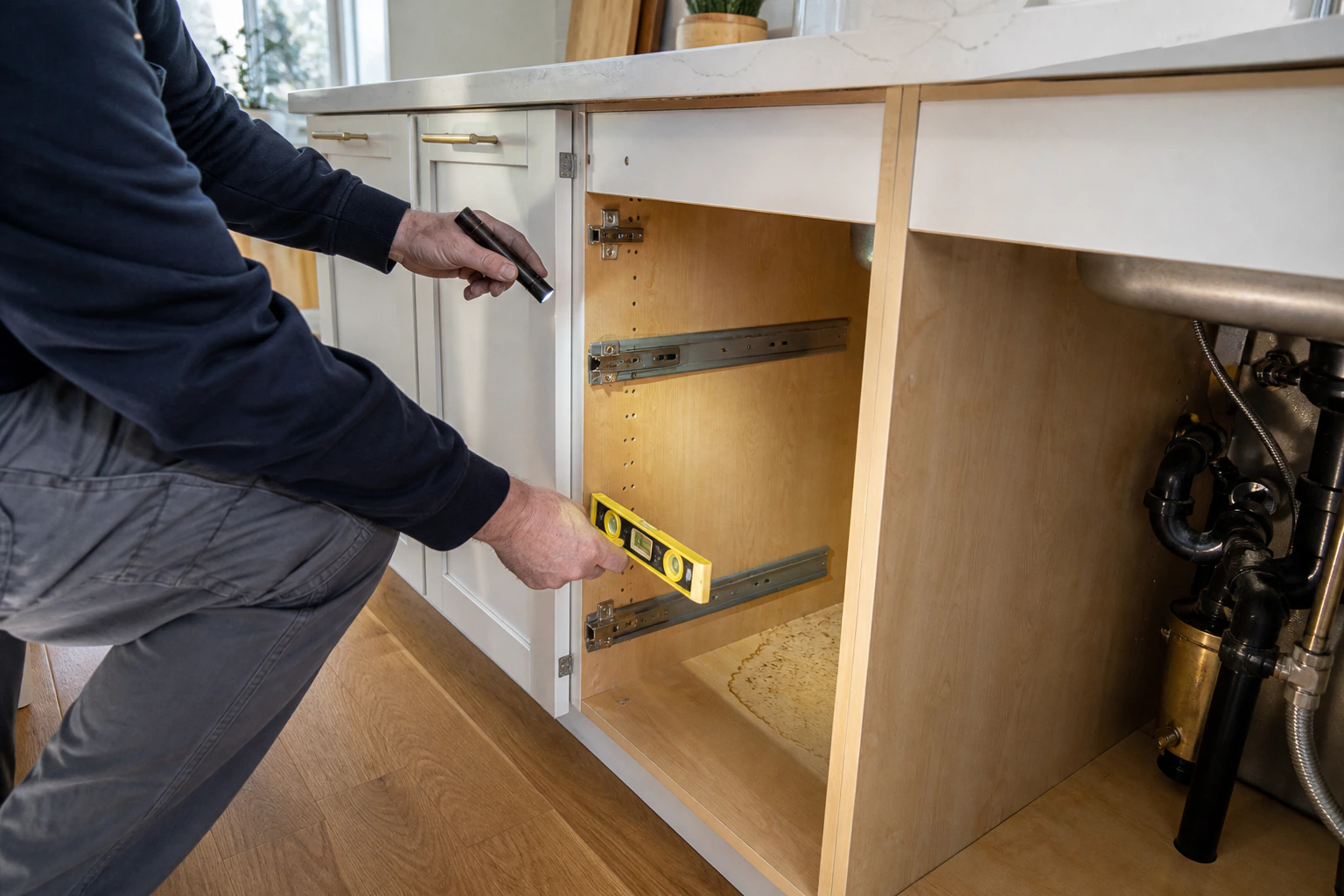
A dark oak door can make a kitchen look dated while hiding a perfectly solid cabinet box. A newer front can just as easily conceal water-swollen panels, a sagging bottom, or an installation that is out of level. Before discussing colour, open every cabinet, remove a few drawers, and assess the structure, fasteners, moisture, and layout. That diagnosis separates a smart saving from an expensive compromise.
Option 1: keep the cabinets and target the upgrades
Keeping the cabinets often delivers the best result for the budget when the layout works and the boxes are dry, rigid, and properly secured. The transformation can then come from surfaces and details instead of demolition.
- Doors and drawers operate correctly without excessive play or sagging
- Boxes are square, securely anchored, and free of swelling under the sink
- Counter heights, clearances, and the sink-cooking-refrigerator workflow suit the household
- Storage meets real needs, perhaps with new slides, dividers, or organizers
- Professional painting, hardware, lighting, and backsplash can transform the room
Option 2: restore or replace only the fronts
Refacing keeps the cabinet boxes but replaces doors and drawer fronts; exposed sides receive matching panels or a new finish. It makes sense when the structure and layout are sound but the style, edges, or doors are beyond a simple paint job. Price the complete scope: fronts, finished panels, hinges, pulls, adjustments, and labour. A poorly defined partial solution can approach the cost of new cabinetry without improving storage or layout.
How to restore wood kitchen cabinetsOption 3: replace everything
Replacement becomes the logical choice when it solves a problem that new fronts cannot. It lets you rethink dimensions, work zones, appliances, and storage, but it also brings removal, wall levelling, technical alterations, and a new countertop into scope.
New cabinets: IKEA or a kitchen studio?- Water damage, persistent odour, mold, or swollen particleboard
- Warped boxes, sagging shelves, or inadequate wall fastening
- A layout that blocks circulation or provides too little work surface
- Appliances that cannot be integrated cleanly at their required dimensions
- Plumbing, electrical, or ventilation work that requires modules to be opened and rebuilt
- Storage needs that the current boxes cannot reasonably support
The trap of putting a new countertop on old cabinets
A countertop is fabricated to the exact position of the cabinet boxes. If you replace the cabinets later, dimensions, seams, sink cutouts, and overhangs may no longer align; stone can also be damaged during removal. Installing a new counter now is sensible when the layout will remain and the boxes have passed inspection. If reconfiguration is likely, plan the whole project before ordering the surface that is hardest to reuse.
Old does not mean bad, and new does not guarantee better
Some older plywood or solid-wood cabinets remain structurally excellent. Some new systems offer better storage, but their durability depends on the material, hardware, and especially the installation. Compare box thickness and condition, slide and hinge quality, moisture resistance, repairability, and installation accuracy, not only the door colour or supplier name.
In a Montreal home, inspect before you demolish
Uneven walls, out-of-level floors, and older services are common in Montreal plexes and houses. A kitchen that appears merely dated may require electrical or plumbing corrections as soon as modules move. An inspection and measured plan let you compare three scenarios on equal terms: keep, reface, or replace. A full ConsQualif kitchen renovation generally takes about three weeks on site, excluding fabrication ordered in advance and surprises uncovered during opening.
Quick diagnosis before requesting a quote
- - Photograph cabinet interiors, especially below the sink and beside the dishwasher
- - Check for swelling, odour, moisture, cracks, sagging, and wall fastening
- - Name the real problem: appearance, storage, circulation, or appliance location
- - Decide whether the layout should remain for the next several years
- - Request separate scopes for keeping, refacing, and full replacement
- - Do not order the countertop until the cabinet decision is confirmed
The best saving is not always keeping everything, and the best renovation is not always throwing everything away. If the boxes are sound and the layout works, targeted restoration can preserve budget for the countertop, lighting, and finishes. If structure, moisture, or circulation is the problem, replacing once is often safer than paying twice. ConsQualif can inspect what you have, compare the scenarios, and define a clear scope before you commit to purchases.
FREE ESTIMATE
Ready to start your project?
Get a free, no-obligation estimate. Our RBQ-licensed team replies quickly.