How Do You Replace a Kitchen Countertop?
October 2026 - 8 min read
Replacing a countertop also affects the sink, faucet, backsplash and sometimes the cabinets. Here are the measurements, materials and checks to complete before requesting a quote.
What "replacing the countertop" really involves
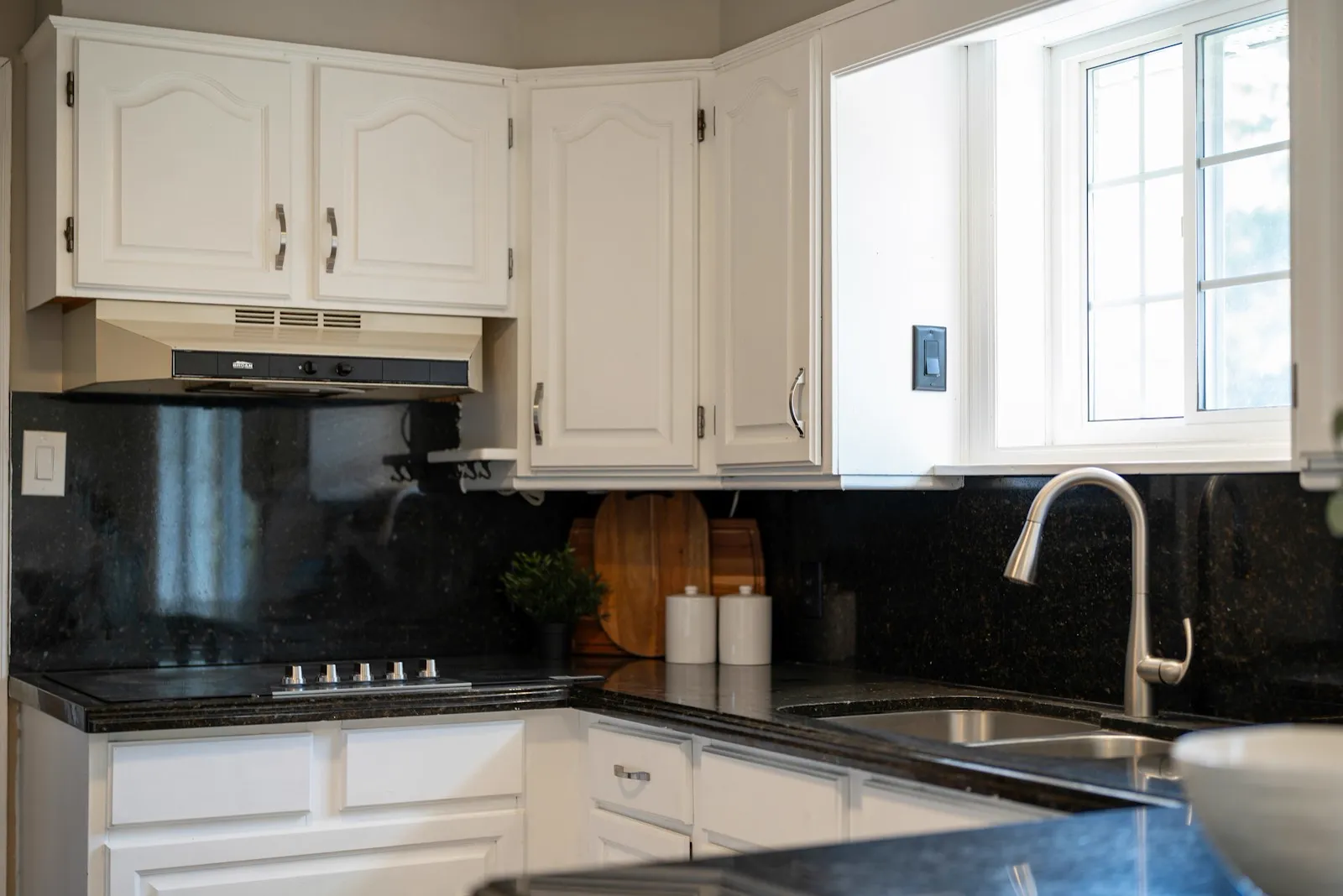
A countertop is never installed on its own. To replace it, everything attached to it has to come off, then go back on around the new surface. That is why two quotes for "a countertop" can cover very different work: one prices only the surface, the other includes removal, the sink, plumbing and backsplash.
- Removing the old countertop and disposing of the debris
- Disconnecting and reconnecting the sink, faucet and dishwasher
- Removing and reinstalling a built-in cooktop, if there is one
- Redoing the backsplash, which is often glued or sealed to the existing counter
- Measuring, fabricating, installing, cutting and caulking the new surface
Step 1: check the cabinets first
The new countertop sits on your existing cabinet boxes. If they are swollen under the sink, sagging, poorly fastened to the wall or out of level, the new surface inherits the problem: seams that open, an overhang that tilts, stone that cracks under stress. Open every base cabinet and look closely around the sink and dishwasher. If the boxes are doubtful, the question is no longer just the countertop.
Keep, reface or replace your cabinets: how to decideStep 2: take the right measurements, at the right time
Your own measurements are for getting a budget, not for ordering stone. For a quartz or stone countertop, the final template is taken on site once the cabinets are in position and level, because walls in Montreal plexes and houses are rarely square. To prepare the conversation, note:
- The length of each run and the shape (straight, L, U, with an island)
- The depth you want and the overhang at an island or breakfast bar
- The position of the sink, faucet and cooktop
- The dimensions of appliances that sit flush or align with the countertop
- The height and material of the current backsplash, and whether you want to keep it
Step 3: choose the material for how you use the kitchen, not just the photo
Every material has strengths and maintenance demands. Compare them against how your kitchen is really used: frequent cooking, children, hot pans set down directly, the upkeep you are willing to do.
- Laminate: affordable and light, but sensitive to direct heat and to water seeping into seams; hard to repair
- Quartz: a non-porous surface that needs no sealer; protect it from very hot pans
- Granite and natural stone: very hard-wearing, but some need periodic sealing depending on the stone
- Butcher block: warm and repairable by sanding, but needs regular oiling and watching near the sink
What drives the price
The material explains only part of the gap between two quotes. The rest depends on how complex the piece is and what is included around it. Ask for every line item to be detailed so you compare on the same basis.
Compare kitchen quotes line by line- The material, its thickness and the edge profile (square, eased, bevelled)
- The number of cutouts: sink, faucet, cooktop, outlets
- The total length and number of seams, especially for an island
- Removing the old countertop and access to the home (stairs, upper floor)
- Whether the sink, faucet and backsplash are replaced
Step 4: decide on the sink, faucet and backsplash
This is often where the scope changes. An undermount sink needs a solid surface such as quartz or stone; a laminate countertop is usually paired with a drop-in sink. Reusing the sink and faucet is possible if they are in good condition and fit the new cutout. A ceramic backsplash rarely comes off intact, so plan for it to be redone in whole or in part.
When to call a professional
Swapping a simple laminate countertop without touching the plumbing is within reach of an experienced DIYer. In the situations below, a contractor helps you avoid costly do-overs. In Quebec, plumbing and electrical work must be done by companies holding the required licences.
- Moving the sink or dishwasher, or adding a cooktop that needs a new circuit
- Quartz or stone: heavy pieces, precise templating and shop-made cutouts
- Cabinet boxes that are out of level, damaged or need reinforcing to carry the weight
- A ceramic backsplash to redo, or uneven walls to correct
- A countertop that is part of a wider kitchen renovation
Replace only the countertop, or rethink the kitchen?
A new countertop is fabricated to the exact position of the cabinet boxes. If you plan to change the cabinets or layout in the next few years, stone installed today may not follow. If the cabinets and layout will suit you for a long time, replacing only the countertop makes sense, and ConsQualif takes on this kind of job. Resurfacing products also exist; we explain why we do not recommend them.
Resurface or replace your countertop: comparing both optionsDecision checklist before replacing your countertop
- - Inspect the base cabinets, especially under the sink and beside the dishwasher
- - Note the dimensions, shape and position of the sink and cooktop
- - Choose the material for real use and the upkeep you accept
- - Decide whether the sink, faucet and backsplash stay or go
- - Check whether plumbing or electrical work needs to change
- - Confirm that the cabinets and layout will stay in place long term
- - Ask for a quote that details removal, fabrication, installation and connections
A well-chosen, well-installed countertop lasts for years; one set on tired cabinets or measured badly costs twice. ConsQualif also replaces the countertop on its own, without renovating the whole kitchen, with options for every budget. Let's talk about your kitchen renovation project. During the free visit, we look at your cabinets and existing plumbing and electrical, then give you a detailed written estimate that sets out the right scope for your kitchen.
FREE ESTIMATE
Ready to start your project?
Get a free, no-obligation estimate. Our RBQ-licensed team replies quickly.