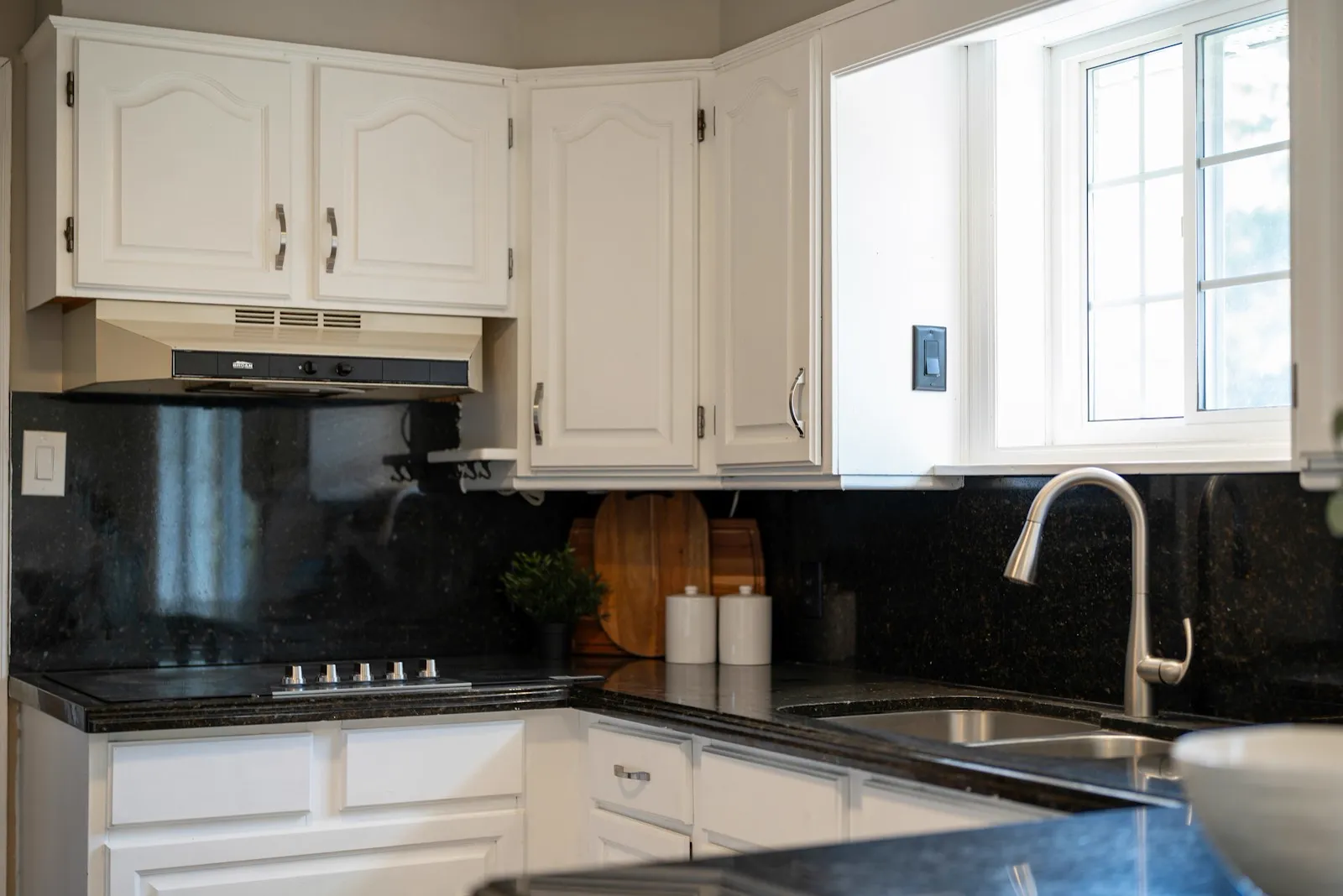
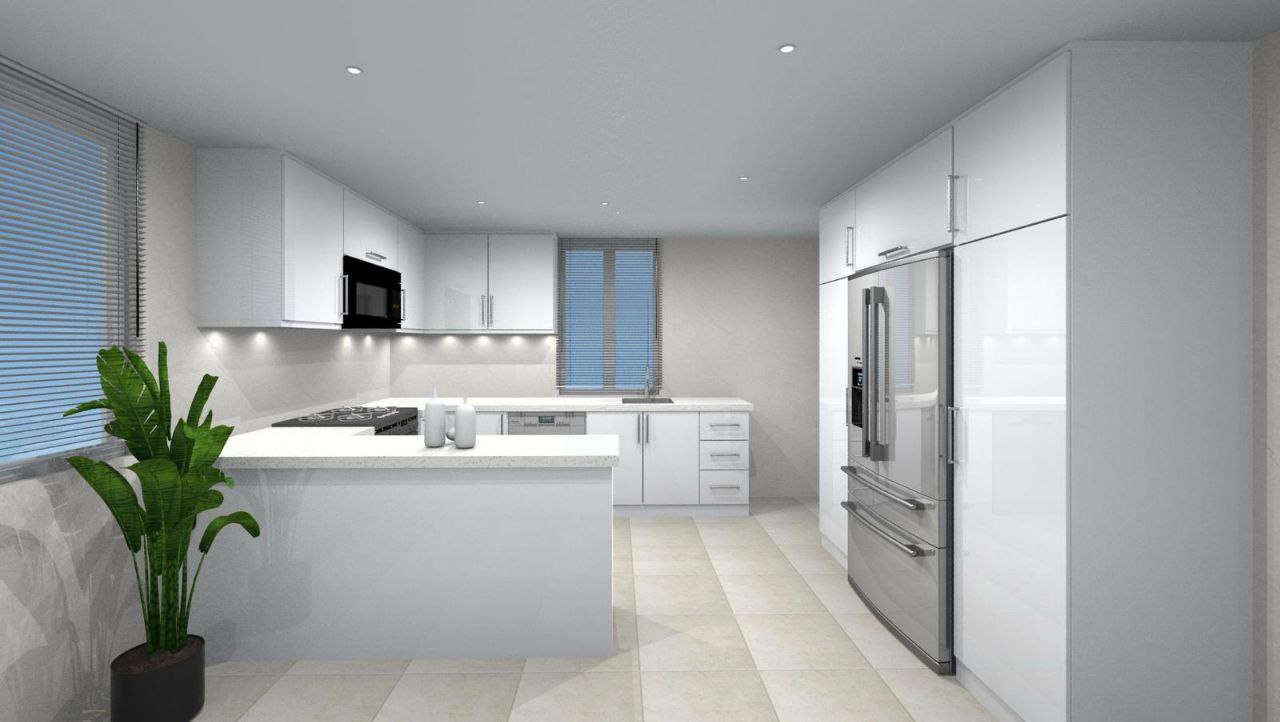
Resurface or Replace Your Kitchen Countertop?
October 2026 - 7 min read
Film, paint, resin or a new countertop: here is what each option can fix, its limits and what drives the cost, and why ConsQualif replaces countertops rather than resurfacing them.
Resurfacing: what exactly does it mean?
Resurfacing a countertop means applying a new surface over the existing one without removing it. The look changes, but the original substrate stays in place with its strengths and flaws. The most common approaches are:
- Adhesive film: a decorative film applied over the existing laminate
- Paint or a countertop refinishing kit: primer, colour coat and protective topcoat
- Poured epoxy resin: a thick, glossy coat that often imitates stone
- Thin overlay panel: a new surface bonded on top of the old countertop
Start with the real condition of the surface
Resurfacing hides; it does not repair. Before comparing prices, check whether the substrate can still carry a new layer for years. If any of the following signs are present, resurfacing will only postpone the problem:
- Laminate swelling or peeling around the sink or at the seams
- Through-cracks, deep chips or burns that reach the substrate
- A countertop that flexes, tilts or is no longer level
- Base cabinets that are sagging, damp or water-damaged
- Odour or mold under the sink
What resurfacing can do, and its limits
On a sound substrate, well-prepared resurfacing can change how a countertop looks in the short term. Its limits are real, though, and should be known before you decide.
- Durability depends mostly on preparation: degreasing, sanding and the right primer
- Films and paints stand up less well to heat, cuts and wear than the original surfaces
- Edges, corners and the area around the sink are the first places to lift or wear
- Some resins can yellow over time and mark under a hot pan
- The sink type does not change: an undermount sink remains impossible on resurfaced laminate
- A resurfaced top is harder to repair cleanly than to redo
Why ConsQualif does not resurface countertops
We do not offer countertop resurfacing. The original substrate stays in place with its flaws, the new layer wears first where the counter works hardest, and a redo often costs more than doing it right the first time. We prefer to replace the countertop, with options for every budget, from laminate to stone. The result lasts, and the sink, faucet and backsplash can be reviewed at the same time.
Replacing: when it is the lasting solution
Replacing the countertop lets you fix the substrate, choose a more durable material and rethink the sink, faucet and backsplash. It is the logical choice when the surface is damaged deep down, when you want an undermount sink or stone, or when you plan to keep the kitchen for a long time. The cabinets must be sound, though: a new countertop on tired boxes inherits their flaws.
How to replace a kitchen countertop: the stepsEveryday upkeep and durability
Compare both options against how your kitchen is really used. A resurfaced top usually needs more care: trivets, a cutting board, gentle cleaners. Quartz cleans simply and needs no sealer; some natural stones need periodic sealing; butcher block needs regular oiling. The more the kitchen is used, the more the durability gap matters.
What drives the cost, on either side
There is no fixed price for either option. To compare honestly, look at the cost over the time you plan to keep the kitchen: resurfacing that has to be redone can end up costing more than a replacement done once.
- Resurfacing: surface area, substrate repairs, preparation, product chosen and edge finishing
- Replacement: material, thickness, number of cutouts and seams, removal of the old countertop
- Both: sink, faucet, backsplash and any plumbing or electrical changes
Selling soon or staying for years?
If you are preparing to sell, a new entry-level countertop, such as laminate, shows better and for longer than a resurfaced one. If you are staying several years, invest once in a durable surface, ideally alongside the other decisions on cabinets and layout, so you do not pay twice.
Keep, reface or replace your cabinetsBefore choosing between resurfacing and replacing
- - Check the current countertop for swelling, peeling, cracks and level
- - Open the base cabinets and inspect the boxes under the sink
- - Be clear on use: heavy cooking, children, hot pans, upkeep you accept
- - Decide whether the sink and backsplash need to change
- - Estimate how many years you plan to keep the kitchen
- - Compare each option's cost over that period, not just the upfront price
Resurfacing changes the look for a while; replacing is the only option that fixes a damaged substrate or lets you change material and sink. That is why ConsQualif replaces countertops, on their own or as part of a full renovation, with options for every budget. During a free visit, we look at the surface and cabinets, then give you a detailed written estimate.
FREE ESTIMATE
Ready to start your project?
Get a free, no-obligation estimate. Our RBQ-licensed team replies quickly.